Tokyo to Kyoto Shinkansen: 2026 Prices, Times & Tickets
Key Takeaway: In 2026, a reserved seat on the Tokyo to Kyoto Shinkansen costs ¥14,370 and takes exactly 2 hours and 15 minutes on the fast Nozomi service. Unless you plan to travel extensively across Japan within a 7-day window, buying individual tickets is much cheaper than purchasing a Japan Rail Pass. Secure your preferred departure time and a window seat by checking the latest schedules and booking your tickets at japantrain.net.
The platform chimes play a soft, almost nostalgic melody. Then, the sleek white nose of an N700S series train glides into the station. You are about to board the Tokyo to Kyoto Shinkansen, without a doubt the most heavily traveled high-speed rail route on the planet. I have ridden the Tokyo to Kyoto Shinkansen line more times than I can count over the last decade. And the thrill of watching the urban sprawl fade into tea fields at 285 km/h never gets old. Planning this trip in 2026 means navigating a few recent changes to Japan's rail network, especially regarding pass validity and luggage rules.
Most travelers agonize over which train to catch. But the system is surprisingly straightforward once you understand the hierarchy of the Tokaido Shinkansen line. You just need to know what you are paying for, how long you want to sit, and whether you care about skipping a few minor stations along the way. To ensure a smooth ride, reserve your Shinkansen tickets online before arriving at the station.
Quick Overview: The Tokaido Shinkansen at a Glance


Before we break down the specific pricing and train categories, here are the hard facts about the Tokyo to Kyoto Shinkansen in 2026:
- Distance: 513 kilometers (318 miles) along the eastern seaboard.
- Top Speed: 285 km/h (177 mph).
- Departure Frequency: Up to 12 trains per hour during peak times. You rarely wait long.
- Terminals: Trains depart from Tokyo Station (or Shinagawa) and arrive at Kyoto Station.
- Onboard Amenities: Free Wi-Fi, power outlets at every window seat (and all seats on newer N700S models), and spotless restrooms.
Tokyo to Kyoto Shinkansen: 2026 Ticket Prices & Seat Classes

Japan's rail pricing rarely fluctuates wildly, but slight adjustments and peak-season surcharges do apply in 2026. You have three primary choices when buying a ticket: Unreserved (jiyuseki), Reserved (shiteiseki), and Green Car (the first-class equivalent). A standard reserved seat on the Nozomi from Tokyo to Kyoto costs ¥14,370 in 2026, making it the most efficient balance of price and speed.
Unreserved tickets save you a few hundred yen. But they come with a major risk. During busy periods like cherry blossom season or Golden Week, unreserved cars (usually cars 1-3) turn into standing-room-only affairs. You do not want to stand in the aisle for two hours. Pay the extra ¥1,050 for a reserved seat. It guarantees your spot and lets you choose a window or aisle.
Green Cars offer wider seats, deeper recline, and a quieter atmosphere. The legroom puts most domestic airlines to shame. If you are traveling with a lot of gear or simply want to stretch out after a long flight, the upgrade is genuinely comfortable. Children under 12 typically pay exactly half the adult fare for both base fares and seat reservations. To guarantee your spot in any class, book train tickets online before you arrive at the station.
| Ticket Class | Nozomi Price (¥) | Hikari/Kodama Price (¥) | Best For | Action |
|---|---|---|---|---|
| Unreserved (Ordinary) | ¥13,320 | ¥13,320 | Budget travelers with flexible timing | Book |
| Reserved (Ordinary) | ¥14,370 | ¥13,850 | Most travelers wanting guaranteed seats | Book |
| Green Car (First Class) | ¥19,270 | ¥18,750 | Extra legroom and premium comfort | Book |
Travel Time: Nozomi vs Hikari vs Kodama


All three train categories run on the exact same tracks. They use the same sleek train cars. The only difference is how many times they stop on the Tokyo to Kyoto Shinkansen route. The Nozomi shaves a full 30 minutes off your Tokyo to Kyoto Shinkansen journey compared to the Hikari, purely by skipping intermediate stations.
The Nozomi is the undisputed king of the Tokaido line. It stops only at Shinagawa, Shin-Yokohama, and Nagoya before pulling into Kyoto. If you value your vacation time, this is the train you want.
The Hikari is the middle-ground option. It makes a few extra stops at places like Shizuoka or Hamamatsu. The ride takes about 2 hours and 45 minutes. This used to be the default choice for tourists because it was the fastest train covered by the Japan Rail Pass. But with pass rules changing, the Nozomi is now the smarter standalone purchase.
Finally, there is the Kodama. It stops at every single station along the route. The trip stretches to a grueling 3 hours and 40 minutes. Avoid the Kodama unless you are using a specific discount ticket or specifically want to hop off at a minor station.
| Train Type | Travel Time | Number of Stops | JR Pass Coverage (2026) | Action |
|---|---|---|---|---|
| Nozomi | 2h 15m | 4 | Requires extra surcharge ticket | Book |
| Hikari | 2h 45m | 7-9 | Fully covered | Book |
| Kodama | 3h 40m | 15 | Fully covered | Book |
When you are ready to finalize your itinerary, check latest prices on japantrain.net to find the exact departure times that fit your schedule.
Navigating the Stations: Tokyo and Kyoto
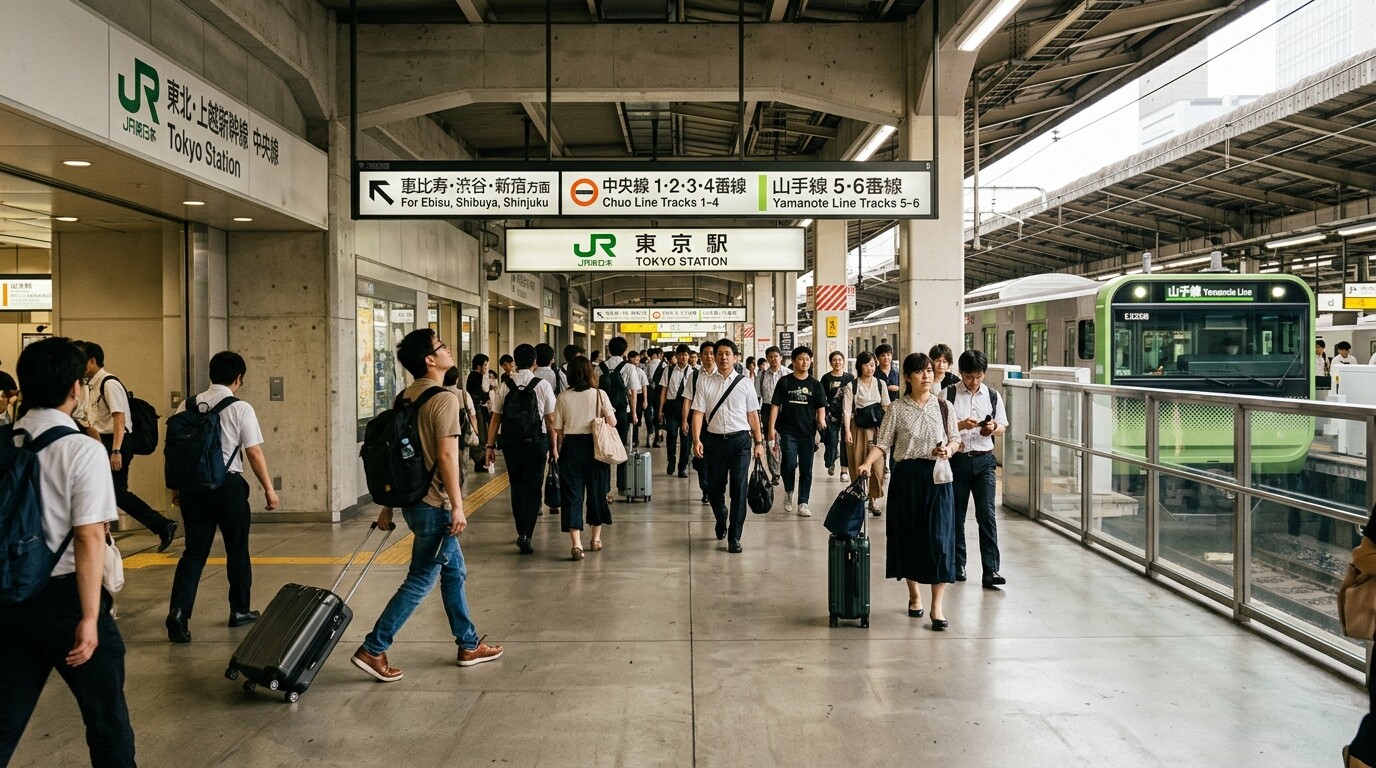
Boarding the Tokyo to Kyoto Shinkansen requires navigating two of Japan's busiest transit hubs. Tokyo Station is a massive complex. The Shinkansen tracks are located on the Yaesu side (the east side) of Tokyo Station. If you arrive via the Marunouchi side (the historic red brick building), you will need to walk through the station concourse following the blue signs for the Tokaido Shinkansen.
Kyoto Station is equally impressive, featuring a striking modern design. The Shinkansen tracks are located on the Hachijo side (the south side). If your hotel is in downtown Kyoto near Gion or Kawaramachi, you will exit the Shinkansen gates and head toward the Karasuma side (the north side) to catch a taxi or the local subway lines. Knowing these layouts saves you from dragging luggage through crowded corridors.
Onboard Experience: Wi-Fi, Food, and Comfort
The Tokyo to Kyoto Shinkansen onboard experience is designed for maximum passenger comfort, especially on the modern N700S trains operating on this route. Free "Shinkansen Free Wi-Fi" is available in all cars, though the connection can occasionally drop when passing through tunnels. Every window seat features a dedicated power outlet, and on the newest train models, every single seat has its own plug.
One major change to note for 2026 is the complete removal of onboard smoking rooms, which were repurposed to store emergency drinking water. All Tokaido Shinkansen trains are now 100% smoke-free. Additionally, as mentioned below, the traditional food carts are gone. You must purchase your meals and drinks before boarding. The stations offer incredible "ekiben" (station bento boxes) featuring local specialties like wagyu beef or seasonal seafood.
The Japan Rail Pass Dilemma in 2026
For decades, the JR Pass was the ultimate travel hack. You bought it, flashed it at the gate, and rode the Hikari train for "free." That era ended in late 2023 when prices for the national pass spiked by nearly 70%. For a simple round trip, buying individual Tokyo to Kyoto Shinkansen tickets in 2026 is drastically cheaper than purchasing a 7-day Japan Rail Pass.
A 7-day national pass now costs around ¥50,000. A round-trip ticket from Tokyo to Kyoto is roughly ¥28,740. The math simply does not work out in favor of the pass unless you are also adding a Tokyo to Osaka Shinkansen leg, traveling down to Hiroshima, and heading up to Kanazawa all within the same week.
Furthermore, standard JR Passes still do not cover the Nozomi train by default. If you hold a pass and want to ride the fast train, you must buy an upgrade ticket (around ¥4,960 one-way) just to board the Nozomi. Save yourself the headache. Buy point-to-point tickets. According to JR Central's official passenger data, over 80% of domestic travelers use point-to-point ticketing for this route.
6 Pro Tips for the Tokyo to Kyoto Route
Mastering the Tokyo to Kyoto Shinkansen route takes a bit of insider knowledge. Here are my top recommendations for a flawless trip in 2026:
- Book Seat E for the Mountain View: If you want to see Mount Fuji, request Seat E (or Seat D in the Green Car) when traveling from Tokyo to Kyoto. The mountain usually appears about 45 minutes into the ride, just past Mishima station. If you are traveling the opposite way (Kyoto to Tokyo), you still want Seat E.
- Understand the Oversized Baggage Rule: Since 2020, if your suitcase's total dimensions (height + width + depth) exceed 160cm, you must reserve a specific "seat with oversized baggage area." These are the last row of seats in the train car. If you board with massive luggage without a reservation, the conductor will charge you a ¥1,000 fine and move your bags. Read our full Shinkansen Luggage Rules 2026: Avoid the ¥1,000 Fine guide for details.
- Buy an Ekiben Before Boarding: Onboard food carts were retired from the Tokaido Shinkansen in late 2023. You can no longer buy hot coffee or bento boxes from a trolley rolling down the aisle. Buy your snacks, drinks, and gorgeous regional bento boxes at the station concourse before passing through the ticket gates.
- Use Shinagawa Station if Possible: Tokyo Station is massive and confusing. If your hotel is in southern or western Tokyo (like Shibuya or Shinjuku), it is often much faster to catch the Shinkansen at Shinagawa Station. Every single Nozomi stops there, and the transfer from local lines to the bullet train is incredibly fast.
- Avoid the Friday Night Rush: Business travelers flood the Shinkansen between 5:00 PM and 8:00 PM on Fridays. Trains sell out quickly. If you must travel during this window, reserve your tickets weeks in advance.
- Skip the Ticket Machines: The machines at Tokyo Station often have long lines. You can bypass this entirely for your Tokyo to Kyoto Shinkansen trip. Just book train tickets online through japantrain.net, receive your QR code, and pick up your physical tickets at the automated scanners in seconds.
Frequently Asked Questions
How much is the Tokyo to Kyoto Shinkansen in 2026?
A standard reserved seat on the Tokyo to Kyoto Shinkansen (Nozomi service) costs ¥14,370 in 2026. Prices may vary slightly depending on whether you choose an unreserved seat, which is cheaper, or a first-class Green Car seat.
How long is the Tokyo to Kyoto Shinkansen ride?
The fastest Nozomi service takes exactly 2 hours and 15 minutes to travel between Tokyo and Kyoto. The Hikari service takes approximately 2 hours and 45 minutes, while the Kodama service is the slowest at nearly 3 hours and 40 minutes.
What is the difference between Nozomi and Hikari trains?
The Nozomi is the fastest category with the fewest stops, while the Hikari stops at more stations and takes about 30 minutes longer. Crucially, the Hikari is covered by the Japan Rail Pass, whereas the Nozomi requires a supplemental surcharge.
Which side of the train should I sit on to see Mount Fuji?
To see Mount Fuji when traveling from Tokyo to Kyoto, you must book a 'Seat E' in an ordinary car or 'Seat D' in a Green Car. These seats are located on the right-hand side of the train when departing from Tokyo.
Is the Japan Rail Pass worth it for a Tokyo to Kyoto round trip?
No, a simple round trip between Tokyo and Kyoto costs approximately ¥28,740, which is far below the price of a 7-day Japan Rail Pass (around ¥50,000). You would need to travel significantly more, such as adding a trip to Hiroshima, to make the pass cost-effective.
Do I need to book Tokyo to Kyoto Shinkansen tickets in advance?
Booking Tokyo to Kyoto Shinkansen tickets in advance is highly recommended during peak travel periods like Cherry Blossom season, Golden Week, and New Year's to guarantee a reserved seat. For off-peak travel, you can often buy tickets at the station shortly before departure, but booking online ensures you get your preferred seat and departure time.


