Tokyo to Fukuoka Shinkansen: Travel Time, Tickets & Route Guide

Key takeaway: Direct Nozomi services connect Tokyo or Shinagawa with Hakata, the Shinkansen station for Fukuoka. The fastest departures are usually just under five hours, while Japan Rail Pass-compatible connections generally take longer and require a change. Compare the timetable and fare shown for your travel date before booking.
The Tokyo to Fukuoka Shinkansen runs from the Tokaido Shinkansen onto the Sanyo Shinkansen, covering most of Japan's main island before reaching Kyushu. This guide explains the direct and connecting options, the stations to use, seat choices, luggage planning and onward travel from Hakata without relying on a fixed historical fare or one guaranteed journey time.
Tokyo to Fukuoka Shinkansen: route overview
- Departure: Tokyo Station or Shinagawa Station.
- Arrival: Hakata Station in Fukuoka.
- Fastest option: a direct Nozomi service when available for the selected date.
- Japan Rail Pass option: use covered services such as Hikari and Sakura, normally with a transfer at Shin-Osaka; Nozomi use requires the applicable additional ticket under current JR Pass rules.
- Booking check: confirm the live timetable, seat class and fare for the exact departure before paying.
For current operating information, consult JR Central and JR West.
How long does the Tokyo to Fukuoka Shinkansen take?
The quickest direct Nozomi journeys are generally a little under five hours from Tokyo to Hakata. The exact duration changes by departure because stopping patterns and timetable conditions differ. Hikari and Sakura combinations normally take longer and require a transfer at Shin-Osaka.
Direct Nozomi or Hikari plus Sakura?
| Option | Transfer | Best for |
|---|---|---|
| Direct Nozomi | Usually none | The shortest scheduled journey |
| Hikari plus Sakura | Usually Shin-Osaka | Travel using services covered by an eligible JR Pass |
Search Tokyo or Shinagawa to Hakata for the intended date because the fastest service, transfer time and last departure vary through the day.
Tokyo to Fukuoka Shinkansen tickets and seat classes
The total fare depends on the selected train, reservation type, seat class, travel date and seasonal pricing rules. Use the current booking result rather than a price copied from an older guide.
Which seat should you choose?
- Ordinary reserved: a practical choice for most travelers and groups who want assigned seats.
- Green Car: wider seating and a quieter layout for travelers who value additional space.
- Unreserved: availability and carriage rules depend on the service; check the selected train before relying on this option.
Check current Tokyo to Hakata trains and ticket options. The displayed result is the relevant source for the departure you are considering.
Flying vs. Bullet Train to Fukuoka (The Honest Truth)
The Luggage Factor
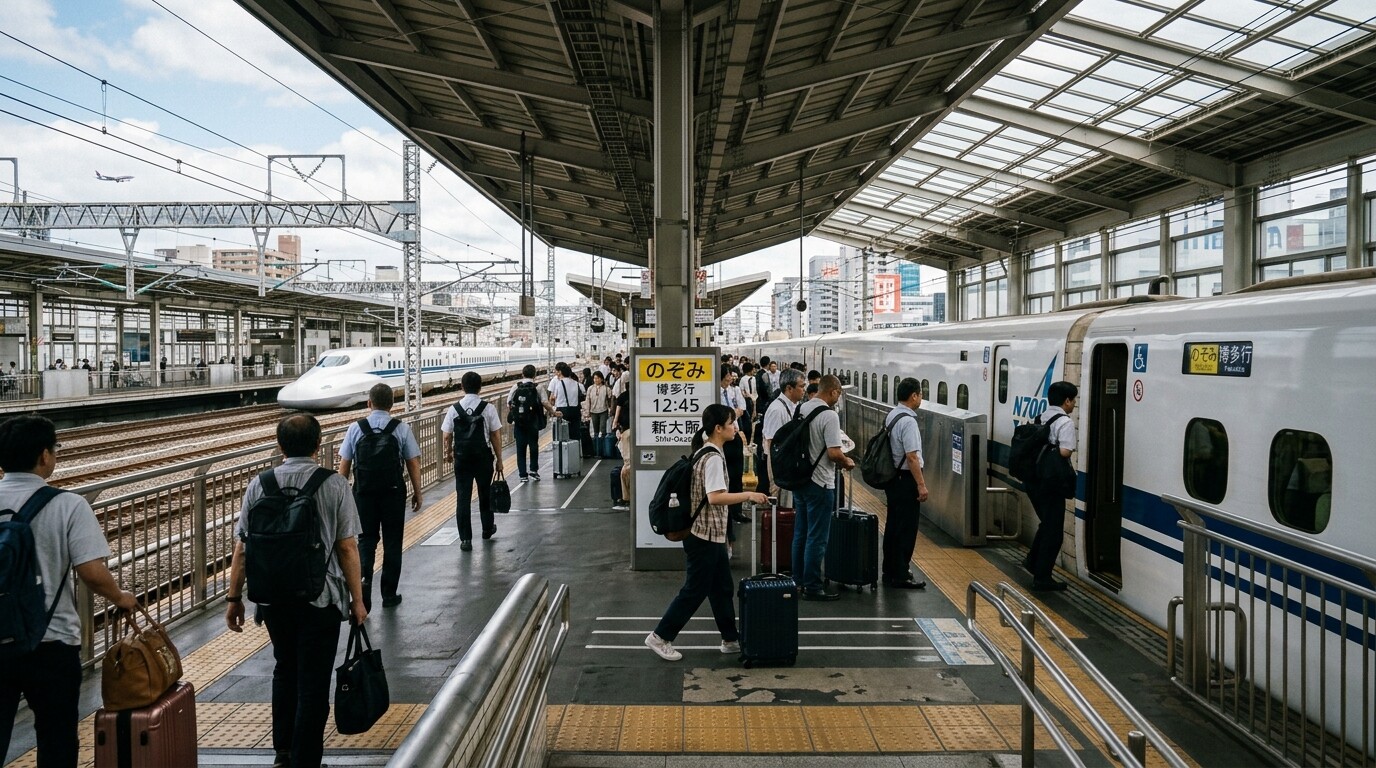
Airlines charge heavy checked bag fees. The bullet train lets you bring two large suitcases entirely for free, provided you follow the specific Tokyo to Fukuoka Shinkansen rules. Reserve the right space. You must secure a specific oversized baggage seat if your suitcase exceeds the standard airline carry-on size limits. You should read our detailed Shinkansen oversized-luggage rules guide before packing your bags.Which side has Mount Fuji views toward Fukuoka?
Mount Fuji is normally on the right-hand side when traveling west from Tokyo. Seat letters differ by train and car layout, so use the seat map shown during booking instead of assuming one letter for every service. A requested window seat does not ensure a clear view: weather, cloud, daylight and the assigned equipment all matter.
The Onboard Experience: What to Expect
Japanese Tokyo to Fukuoka Shinkansen trains are exceptionally quiet. You will not hear loud phone conversations or crying children, because cultural etiquette demands absolute silence in transit. The train bathrooms are spotless. Cleaning crews sanitize the entire train at terminal stations, ensuring western-style toilets remain pristine throughout the long journey. Food options are limited. Because traditional cart services ended, you must rely on small vending machines or buy snacks before you board. Pack a good meal. You can book at japantrain.net knowing you will have plenty of fold-out table space for your lunch.Navigating Tokyo and Hakata Stations
Big stations cause major anxiety. But following the prominent blue Shinkansen signs will guide you through the chaotic Tokyo Station pedestrian maze when boarding the Tokyo to Fukuoka Shinkansen. Always give yourself extra time. Finding your exact platform among the dozens of local commuter lines takes patience during the frantic morning rush. Hakata Station is much easier. Kyushu's largest railway hub features a logical layout that drops you right next to the local subway. The airport is close. Fukuoka Airport is literally two subway stops away, making regional connections simple for international transit passengers today. Secure your travel plans. You should check latest prices on japantrain.net to compare current departures from these transit hubs.Connecting from Hakata to Other Kyushu Destinations
Your Tokyo to Fukuoka Shinkansen journey does not have to end in Fukuoka. Hakata Station serves as the ultimate gateway to the rest of Kyushu. From here, you can easily transfer to the Kyushu Shinkansen, which runs south toward Kumamoto and Kagoshima. If you want to visit the famous hot springs of Beppu or Yufuin, limited express trains like the Sonic and Yufu depart directly from Hakata's conventional rail platforms. This seamless connectivity makes taking the train from Tokyo an excellent starting point for a broader southern Japan itinerary.Six practical tips for Tokyo to Fukuoka
- Search for Hakata, not Fukuoka, when selecting the Shinkansen arrival station.
- Compare Tokyo and Shinagawa departures if one station is easier to reach.
- Leave a sensible transfer margin when combining Hikari and Sakura services.
- Reserve early for national holidays and other high-demand dates.
- Review oversized-baggage rules before choosing a seat.
- Check the last local connection from Hakata if continuing elsewhere in Kyushu.
Frequently Asked Questions
How long is the Tokyo to Fukuoka Shinkansen journey?
The fastest direct Nozomi services take about five hours from Tokyo to Hakata. Other JR Pass-compatible connections normally require a transfer and take longer, so check the timetable for your travel date.
How much is a Tokyo to Fukuoka Shinkansen ticket?
The fare varies by train, seat class, reservation type and travel date. Check the current result for Tokyo to Hakata before booking rather than relying on a fixed historical fare.
Can I use the Japan Rail Pass between Tokyo and Fukuoka?
Yes, but Nozomi travel requires the applicable special ticket in addition to an eligible Japan Rail Pass. Pass holders can also use covered Hikari and Sakura connections, usually with a transfer at Shin-Osaka.
Which station serves Fukuoka on the Shinkansen?
Shinkansen trains arrive at Hakata Station, the main long-distance rail hub for Fukuoka and a gateway to other destinations in Kyushu.
Which side has Mount Fuji views from Tokyo toward Fukuoka?
Mount Fuji is usually viewed from the right side when traveling west from Tokyo. Visibility depends on weather, and the exact seat letters differ by train and car configuration.